
In the arid villages of Rajasthan, the sun’s heat was relentless. Wells were dry, fields lay fallow, and many men had to leave in search of work. Women walked miles each day to fetch just one pot of water. The situation seemed hopeless, yet a spirit of resilience remained.
In the early 2000s, Amla Ruia visited these drought-stricken villages. Moved by the suffering, she realized that the people didn’t need charity, they needed a solution. This realization announced the start of a life-changing experience.
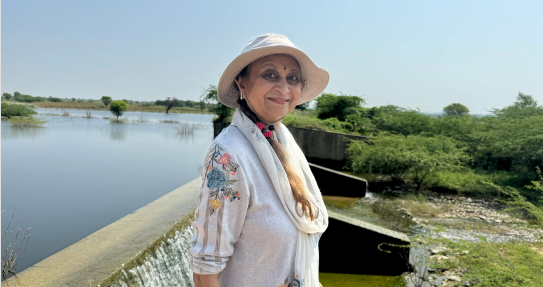
Amla Ruia’s research led her to ancient Indian water conservation methods. Among them were check dams, which could harness rainwater, recharge groundwater, and restore life to the land. This wisdom, though centuries old, offers hope for modern-day challenges.
In 2003, Amla Ruia founded the Aakar Charitable Trust, with the vision of rural development through water conservation projects. The name "Aakar" means "shape" or "form," reflecting the belief that communities could shape their own future if provided with access to water, their most vital resource.
Aakar's approach wasn’t about giving aid, it was about empowering communities. Projects were designed to ensure active participation from villagers, creating a sense of ownership and ensuring long-term sustainability.
Aakar introduced the 30% partnership model, where each village has to contribute minimum 30% of the project cost. This contribution isn’t just in cash, it can be in labor, materials, or pooled savings. By working side-by-side with villagers, Aakar instills a deep sense of pride and responsibility, which is crucial for the success and longevity of the projects.
This model has proven to be incredibly effective, building both physical infrastructure and strong community bonds. Villagers don’t just receive a dam, they gain ownership, pride, and the motivation to care for their water resources.
A single check dam can create a ripple effect of positive change. Here’s how:
The results are visible: green fields where there was once dust, bustling schools, and a debt free community / villagers.
What started in Rajasthan has now spread across India. By June 2025, Aakar had:
Every project is closely monitored, ensuring its long-term success and continued benefits of water conservation for the communities.
For Aakar, water conservation is just the beginning. Once communities have access to water, they can focus on:
This cycle of self-reliance continues long after the check dam is built, creating sustainable rural development in Bihar, MP, and other parts of India.
Aakar’s commitment to transparency is one of its core strengths. Every project is audited, and donors can track how their funds are being used. This openness has built trust not only among donors but also within the communities.
Amla Ruia is affectionately called "Paani Mata" or “Jal Devi” (Water Mother) by the communities she serves. However, she humbly shares this title with her team and the villagers, believing that they are the true heroes.
“I’m just the facilitator. The real heroes are the communities who believe in change.”
Her leadership blends ancient wisdom with modern-day solutions, proving that water conservation can drive rural development in India when communities work together.
Aakar Charitable Trust’s journey is a testament to the transformative power of water conservation. But millions of people still lack secure access to water.
You can be part of this movement. Support water conservation projects, volunteer your time, or simply share this story. Every drop counts in creating a better future for rural communities.
Let’s build a future where every village has the water it needs to thrive, grow, and prosper.

How a Severe Drought Sparked a Dream That Transformed Entire Villages
Read More