
When we talk about water conservation in India , it’s easy to think of it as just saving water. But for Aakar Charitable Trust, it’s about something
bigger - rebuilding rural economies, empowering communities, and securing a future for generations.
Since 2003, this CSR-compliant, FCRA-certified NGO for rural development has been rewriting the story of rural India. With 1,308 water bodies built - including 814 check dams and 494 ponds - across 11 states, Aakar Charitable Trust has touched the lives of over 1.8 million villagers and irrigated 6.7 lakh acres of farmland.
The results? Higher incomes, stronger communities, and thriving villages that no longer depend on migration for survival.

1. Community Ownership Through 30% Contribution
Unlike many water conservation projects, Aakar involves villagers from day one. Each community has to contribute minimum 30% of the project cost - through labor, materials, or savings. This isn’t charity; it’s ownership. When people help build their check dams in India, they get a sense of ownership and responsibility.
2. Water That Brings Social Reform
Before a single stone is laid, villagers have to commit to giving up dowries, alcohol, tobacco, and lavish funeral feasts. This ensures the prosperity from irrigation is used for education, healthcare, and land improvement, not for destructive habits.
3. Swift, Measurable Impact
Within just one monsoon, crop yields rise, incomes grow, and debt cycles break. Migrant workers return, families reunite, and villages regain life.
4. Full Transparency
Every rupee is accounted for. The Trust’s financial and operational transparency builds trust among villagers and donors.
5. Structures Built to Last
Using high-quality materials and proven engineering, these dams withstand monsoon floods, recharge groundwater, and serve communities for decades without costly rebuilds. In many villages, groundwater levels are so low that handpumps and wells run dry for months, leaving families with no reliable source of water. By slowing down and storing rainwater, check dams allow it to seep into the soil, replenishing underground reserves. Over time, this raises the water table, ensuring that even during the peak of summer, wells and hand pumps have a steady supply - ending the cycle of water scarcity.
When a dam fills, transformation begins:
Founded by Amla Ruia, known as The Water Mother of India, Aakar blends traditional water conservation methods with modern engineering. The result? For every ₹85 crores invested, rural communities generate ₹3,475 crores in annual income - year after year.
This isn’t just water conservation. This is nation-building.
Join the Movement.
If you believe in sustainable water management, rural empowerment, and transforming lives through community-driven projects, support Aakar Charitable Trust. Each drop we conserve today helps shape a brighter tomorrow.
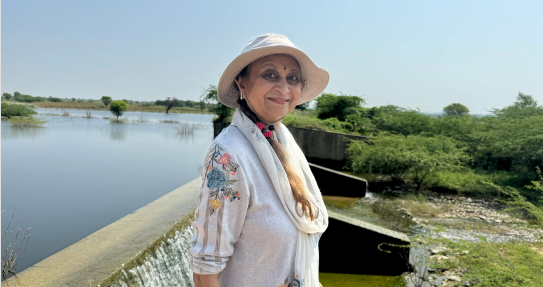
How Amla Ruia Turned a Drought into a Movement for Rural Transformation
Read More